Marianna Spring: BBC Disinformation Correspondent, Career, Book and UK Investigations

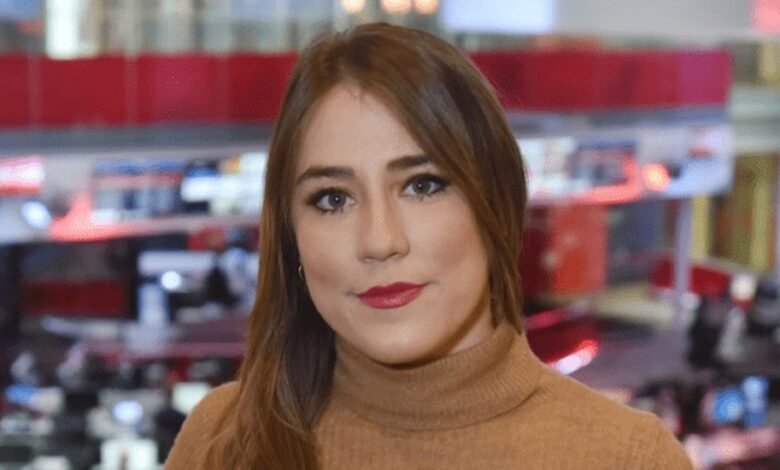
Marianna Spring is a British broadcast journalist and the BBC’s first disinformation and social media correspondent. Her job is not simply to say a post is false. In her own description of the role, the focus is to humanise disinformation and explain its impact to viewers, listeners and readers — to show who spreads it, who is hurt by it, and how it travels through social media feeds in the UK and beyond.
That human angle is what separates her reporting from a standard fact-check. She tracks down the people behind viral claims and the victims of them, and she tests, in practice, what ordinary social media users actually see.
Quick Bio
| Detail | Info |
|---|---|
| Full Name | Marianna Spring |
| Born | 21 February 1996 |
| Age | 30 in 2026 |
| Birthplace / Hometown | Sutton, South London, England |
| Education | Sutton High School, London; French and Russian at Pembroke College, Oxford |
| Occupation | Journalist, BBC Disinformation and Social Media Correspondent |
| Known For | BBC Panorama, Americast, Marianna in Conspiracyland, Why Do You Hate Me?, Undercover Voters, and the book Among the Trolls |
| Book | Among the Trolls: Notes from the Disinformation Wars (Atlantic Books, March 2024) |
| Awards | Forbes 30 Under 30 (2021); British Press Guild Audio Presenter of the Year (2022); RTS Innovation Award for Undercover Voters (2023); RTS Young Talent of the Year nominee (2023) |
Early life and education in the UK
Spring grew up in Sutton, South London, and has a younger sister. She has said she became interested in journalism at the age of eight and would watch BBC World News while on holiday.
At Sutton High School, London, she took part in a Newsquest programme for young journalists and won an award for best news article of 2011 by a Year Eleven student. While still at school she was also a ball girl at Wimbledon.
She then studied French and Russian at Pembroke College, Oxford, matriculating in 2014. At Oxford she wrote for and edited the student newspaper Cherwell, and in 2017 she won the Ronnie Payne Prize for Outstanding Foreign Reporting. Her year abroad took her to Yaroslavl in Russia and to Paris, where she contributed articles to The Moscow Times, The Local and Le Tarn Libre. She also undertook work experience at The Guardian and Private Eye.
How she got into the BBC
After graduation, Spring applied for various journalism programmes, including at the BBC, but was not successful at first. Senior Guardian news reporter Alexandra Topping suggested she contact BBC journalists she admired. Emily Maitlis replied and gave her an opportunity to work on Newsnight.
By December 2018 she had co-produced a Newsnight segment about protesters from across the French political spectrum joining the gilets jaunes movement. She joined the BBC in 2018, initially covering breaking news aimed at a younger audience and the general election, before moving into disinformation full-time.
The BBC disinformation role: March 2020 to correspondent in 2022
In March 2020, Spring was appointed the BBC’s first specialist disinformation and social media reporter, following the creation of similar roles at American news organisations such as CNN and NBC. She was promoted to correspondent in August 2022, becoming the BBC’s first disinformation and social media correspondent.
Her beat covers health misinformation, elections, online abuse, conspiracy theories and the way algorithms recommend content. A recurring theme in her work is the UK impact: false claims do not stay online, they affect patients, voters, survivors and public figures in real life.
In 2021 she began working as a reporter for the BBC’s investigative current affairs programme Panorama. Her Panorama work has included:
- Vaccines: The Disinformation War
- Online Abuse: Why Do You Hate Me?
- A Social Media Murder: Olly’s Story
- Disaster Deniers: Hunting the Trolls
- Elon Musk’s Twitter Storm
- Trump: The Sequel?
She also presented the television film The TikTok Effect in 2023.
Undercover Voters: the investigation most biographies barely explain
This is one of the biggest gaps in competing Marianna Spring biographies. Many list Americast as a credit and stop there. They do not explain what Undercover Voters actually is, or why it matters in the UK.
For Americast, Spring created social media profiles for “undercover voters” from across the political spectrum, using data supplied by the Pew Research Center, to report on the content those voters were being shown. The method makes an abstract problem visible: two voters can live in the same country and see completely different political realities in their feeds.
The project later came to the UK as well. The National Centre for Social Research (NatCen) advised on the BBC’s UK Undercover Voters project, in which Spring created 24 Undercover Voters based in eight constituencies around the UK, to interrogate how a UK election was unfolding on people’s social media feeds. In 2023 the team won the Royal Television Society Innovation Award for the Undercover Voters initiative.
On Americast itself, Spring is a co-host alongside BBC North America editor Sarah Smith, BBC Radio 4 presenter Justin Webb and BBC North America correspondent Anthony Zurcher, bringing regular Undercover Voters updates to the podcast.
Podcasts and Radio 4: Marianna in Conspiracyland, Disaster Trolls, War on Truth and Why Do You Hate Me?
Spring’s radio and podcast work is another area where short biographies fall short, often naming one show and missing the rest. Her BBC Radio 4 and podcast investigations include:
- How to Cure Viral Misinformation (2020) — presenter
- The Anti-Vax Files and The Denial Files — presenter
- Death by Conspiracy? (2022) — presenter
- War on Truth (2022) — stories from the information war over Ukraine, speaking to people caught up in the battle for truth
- Disaster Trolls (2022) — including the UK terror survivors tracked down by “disaster trolls” who denied their experiences
- Marianna in Conspiracyland (2023–2025) — exploring the conspiracy theory landscape in Britain
- Why Do You Hate Me? (2024) — in each episode Spring investigates a different case of online hate, meeting people at the heart of the conflict and asking whether understanding, or even forgiveness, is possible. Cases have included a faked AI audio clip of London mayor Sadiq Khan going viral, and online abuse targeting former footballer Eni Aluko, where Spring tracked down one of the trolls.
- Top Comment — a more recent BBC feed co-hosted by Spring and investigative journalist Matt Shea, investigating what is blowing up online, which also carries her earlier series including Marianna in Conspiracyland, Why Do You Hate Me?, Disaster Trolls, Death by Conspiracy? and War on Truth.
Together, these shows explain her method: start with a person, not a claim, and follow the claim to its human consequence.
Among the Trolls: her book
Her debut book, Among the Trolls: Notes from the Disinformation Wars, was published by Atlantic Books in March 2024. In some listings it is also described as Among the Trolls: My Journey Through Conspiracyland.
The book is based on first-hand interviews and original reporting. Spring meets people spreading online conspiracy theories and their victims, and argues that this is not a story of a few lone voices, but of a network of true believers and conspiracy influencers engaged in an international information war. She asks where the anger comes from, what drives otherwise reasonable people to believe that major attacks, wars, health crises and climate change are hoaxes, and what it costs the people who investigate it.
Online abuse, Elon Musk and the 80% figure
In March 2023 Spring wrote a BBC News article on an increase in trolling and online abuse on Twitter under Elon Musk. Musk responded by mockingly tweeting a screenshot of the article, which led to an increase in abuse towards Spring.
She told The Sunday Times in August 2023 that, according to an internal BBC monitoring system, she had received more than 80% of all online abuse directed at BBC journalists in the first six months of that year. That figure is frequently quoted without context in other profiles. The context matters: it was a BBC internal monitoring figure for that six-month period, reported by Spring herself in an interview, not a permanent lifetime statistic, and it helps explain why her later Why Do You Hate Me? work focuses on the experience of being trolled as well as on trolling itself.
The CV controversy, reported fairly
In September 2023, The New European alleged that Spring had lied on a CV when applying for a job in 2018 in Moscow for the US-based news website Coda Story, by claiming she had worked alongside BBC Eastern Europe correspondent Sarah Rainsford. Rainsford said she had only met Spring in social situations.
Spring apologised for what she called an “awful misjudgement”, saying she had only bumped into Rainsford while she was working and chatted to her at various points, but nothing more, and that everything else on her CV was entirely true. A complete biography should include this episode, with her response, rather than either hiding it or presenting the allegation as settled fact on its own.
What competitors get wrong or leave out
Most competing Marianna Spring pages do three things: copy the same short Wikipedia summary, promise personal details in the headline, and stop before her actual investigations. This article deliberately does the opposite:
- Undercover Voters, explained properly — not just named, but how the voter profiles work and how the project moved from the US to 24 UK voters in eight constituencies.
- The full podcast and Panorama list — so readers can actually find and listen to the work, from War on Truth and Disaster Trolls to Why Do You Hate Me? and Top Comment.
- The book, in context — what Among the Trolls argues, not just its title and publication date.
- Abuse and controversy, with sources and limits — the 80% figure with its six-month BBC monitoring context, and the 2023 CV allegation with Spring’s apology included.
- No invented personal details — see the FAQ below.
Frequently asked questions
Who is Marianna Spring?
Marianna Spring is a British broadcast journalist and the BBC’s first disinformation and social media correspondent, known for Panorama, Americast and BBC Radio 4 investigations into conspiracy theories, online abuse and social media algorithms.
How old is Marianna Spring?
She was born on 21 February 1996, so she was 30 in 2026.
Where is Marianna Spring from in the UK?
She grew up in Sutton, South London, attended Sutton High School, and studied French and Russian at Pembroke College, Oxford.
What is Marianna Spring’s book?
Among the Trolls: Notes from the Disinformation Wars, published by Atlantic Books in March 2024, based on first-hand interviews with conspiracy theorists and their victims.
Is Marianna Spring married, and what is her net worth or salary?
No reliable public source found during research confirms a partner, salary or net worth figure for Marianna Spring, so this article does not publish a guess for any of them. Competing pages that promise those details in headlines do not provide a verified source for them either.
Where can I listen to Marianna Spring?
On BBC Sounds and BBC Radio 4, including Americast, Marianna in Conspiracyland, Why Do You Hate Me?, Disaster Trolls, War on Truth and Top Comment, and on BBC One’s Panorama.
More on Presslix
Sources and further reading
- Wikipedia: Marianna Spring — biography, career timeline, Panorama and radio credits
- BBC News / BBC Sounds: Marianna Spring’s Panorama, Americast, Marianna in Conspiracyland, Why Do You Hate Me?, Disaster Trolls and War on Truth pages
- National Centre for Social Research: Advising the BBC’s Undercover Voters — 24 UK Undercover Voters in eight constituencies
- The Sunday Times, 6 August 2023: The BBC’s Marianna Spring interview, including the BBC internal monitoring abuse figure
- The Guardian, 4 September 2023: Zoe Williams interview with Marianna Spring
- Atlantic Books / publisher listings: Among the Trolls, published March 2024
- Forbes 30 Under 30 (2021), Royal Television Society Journalism Awards (2023), British Press Guild Audio Presenter of the Year (2022) listings
- The New European / Deadline, September 2023: CV allegation and Spring’s apology, reported with both sides
Note on this article: career, education, awards, book and programme details above are taken from the sources listed. Personal details with no reliable public source — partner, salary, net worth and height — are intentionally not claimed.




3 Comments