Nigel Farage: Reform UK Leader, Clacton MP and the 2026 By-Election Explained

Introduction
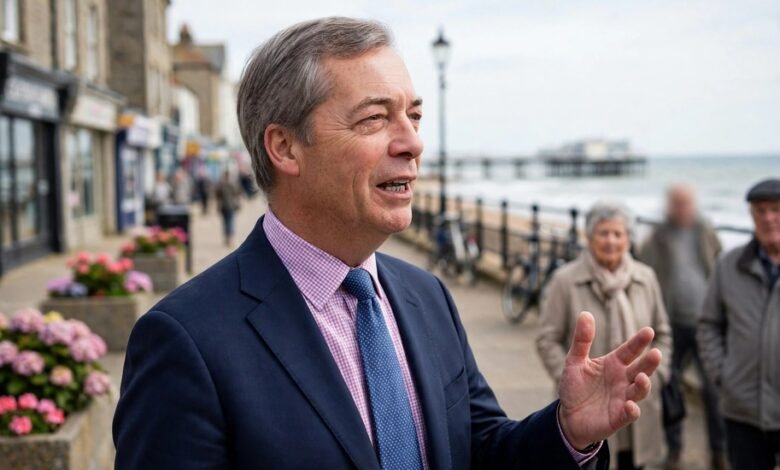
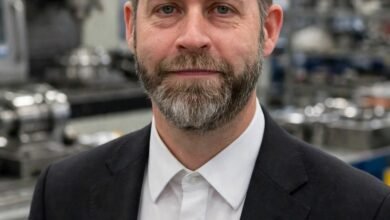
Nigel Farage is a British politician who has led Reform UK since June 2024 and has represented Clacton in Essex as a Member of Parliament since the 2024 general election. He is best known as the most persistent campaigner for the United Kingdom to leave the European Union, a cause he pursued for more than 25 years before the 2016 referendum delivered it — and then kept pursuing, through new parties and new arguments, long after Brexit itself was done.
Farage is unusual among modern party leaders because he reached the Commons only late in his career. For most of his political life he was an outsider figure: a Member of the European Parliament, a party leader without a Westminster seat, and a broadcaster. The 2024 election changed that, and the extraordinary by-election of August 2026 — in which he resigned his own seat and then won it back — made his Clacton story one of the most talked-about episodes of this Parliament.
Quick Bio
| Full Name | Nigel Paul Farage |
| Born | 3 April 1964, Downe, Kent, England |
| Education | Dulwich College; worked in the City of London as a commodities broker |
| Occupation | Politician; former commodities broker and broadcaster |
| Current Role | Leader of Reform UK (since June 2024); Member of Parliament for Clacton (since July 2024, re-elected August 2026) |
| Earlier Roles | Leader of UKIP (2006–2009 and 2010–2016); Leader of the Brexit Party (2019–2021); Member of the European Parliament for South East England (1999–2020) |
| Party | Reform UK (formerly the Brexit Party; before that UKIP) |
| Known For | Campaigning for Brexit; the 2016 EU referendum; leading Reform UK into Parliament in 2024 |
| Net Worth / Salary | No reliable, sourced figure is stated here |
Early life and the City
Farage was born in Downe, Kent, and educated at Dulwich College in south London. He did not go to university. Instead, he went straight into the City of London, where he worked as a commodities broker. That background matters to his politics: he has always presented himself as a businessman-politician rather than a career Westminster insider, and his early Euroscepticism was formed in the financial world of the 1980s and 1990s, when arguments about the single currency and EU regulation were live commercial questions, not abstract ones.
He joined the Conservative Party as a young man and left it in 1992, after the Maastricht Treaty was signed.
UKIP and the long road to the referendum
Farage was a founding member of the UK Independence Party (UKIP) in 1993. He was elected as a Member of the European Parliament for South East England in 1999, and held that seat through successive European elections until the United Kingdom left the EU in January 2020. In the European Parliament he became famous for blunt, confrontational speeches that were widely shared online, long before short-form political video became the norm.
He led UKIP twice, from 2006 to 2009 and again from 2010 to 2016. Under his second leadership the party broke through in a way no smaller party had managed for decades: it won the 2014 European Parliament election in the UK, finishing ahead of both Labour and the Conservatives, and in the 2015 general election it took almost four million votes — 12.6 per cent of the total — while winning only one Westminster seat, because of the first-past-the-post system. That mismatch became one of Farage’s recurring arguments against the electoral system itself.
During the 2016 referendum campaign Farage was a leading Leave voice, although he was not part of the official Vote Leave campaign. His “Breaking Point” poster, showing a queue of migrants, was widely condemned, including by other Leave campaigners, and remains one of the most controversial images of that campaign. When Leave won by 52 per cent to 48 per cent, Farage declared it Britain’s “independence day” — and then, within weeks, stood down as UKIP leader, saying his political ambition had been achieved.
The Brexit Party, Reform UK and a seat at last
Farage did not stay retired. In 2019 he launched the Brexit Party to contest the European Parliament election, arguing that Brexit was being delayed and diluted. The new party won that election in the UK, taking 29 seats. After the UK left the EU in January 2020, the party was renamed Reform UK, and Farage stepped back from its leadership in 2021, handing over to Richard Tice.
The decisive change came in June 2024. With a general election weeks away, Farage returned as Reform UK leader, replacing Tice, and announced he would stand in Clacton. He won the seat on 4 July 2024 with a majority of 8,405 over the Conservative incumbent, overturning a large Conservative majority and becoming one of five Reform UK MPs elected that night. For the first time in seven attempts at a Westminster seat, Farage was an MP.
In Parliament, Reform UK positioned itself as a challenger on immigration, net zero and taxation.
The 2026 resignation and by-election
The most unusual chapter of Farage’s career came in 2026. On 7 July 2026 he announced he would vacate his Clacton seat and re-contest it in a by-election, saying the people of Clacton should be the judges of his actions. The announcement came amid parliamentary scrutiny of his personal finances, including an investigation by the Parliamentary Commissioner for Standards, launched in May 2026, into a reported £5 million payment from Christopher Harborne, a cryptocurrency investor and major Reform UK donor, which had not appeared on Farage’s register of interests. Farage has said he did nothing wrong, describing the payment at different times as a gift for his personal security and as a reward for his Brexit campaigning, and has criticised the way the matter has been pursued.
The by-election was held on 13 August 2026. Labour, the Conservatives, the Liberal Democrats, the Greens and Restore Britain did not field candidates, leaving the satirical candidate Count Binface as his main challenger. Farage was re-elected with 22,239 votes, 63.3 per cent of those cast, on a turnout of 44.4 per cent — more votes than he had won in 2024. He returned to the Commons in September 2026, accompanied to the despatch box by his deputy Richard Tice, and the standards process continued around him. No finding against him is asserted here beyond the fact of the investigation and his denial.
What competitor biographies get wrong or leave out
1. They stop at 2024. Many online biographies still describe Farage simply as the MP elected in 2024. They miss the 2026 resignation, the by-election and his re-election with an increased vote — the most recent and most distinctive part of his parliamentary story.
2. They treat Brexit as the end of the story. Farage’s post-Brexit career — the Brexit Party’s 2019 European election win, the relaunch as Reform UK, and the move into Westminster — is often compressed into a sentence. In fact it is a second political career, with a different party, a different Parliament and a different set of arguments.
3. They skip the City and the European Parliament years. Without the commodities career and the two decades as an MEP, Farage’s outsider status looks like a pose. It was, for most of his life, his actual position: outside Westminster, inside a European institution he wanted Britain to leave.
4. They invent money figures. Estimates of Farage’s wealth circulate widely online and disagree with each other. No reliable, sourced figure is published here.
Frequently asked questions
Who is Nigel Farage?
Leader of Reform UK since June 2024 and Member of Parliament for Clacton since July 2024, re-elected in August 2026.
Why did Nigel Farage resign in 2026?
He announced on 7 July 2026 that he would vacate his seat and re-contest it, saying Clacton voters should judge his actions, amid scrutiny of a reported £5 million payment that is the subject of a parliamentary standards investigation. He denies wrongdoing.
Who won the 2026 Clacton by-election?
Farage, with 22,239 votes (63.3 per cent), ahead of Count Binface on 9,455 votes. The main parties did not contest the by-election.
What parties has Nigel Farage led?
UKIP (2006–2009 and 2010–2016), the Brexit Party (2019–2021) and Reform UK (since June 2024).
What is Nigel Farage’s net worth?
No reliable, sourced figure exists in the sources used here, so none is published.
More on Presslix
Sources and Further Reading
- Nigel Farage on Wikipedia — career timeline, party leaderships and parliamentary record
- UK Parliament — Nigel Farage re-elected as Member of Parliament for Clacton, August 2026 (plain-text source)
- Wikipedia — 2026 Clacton by-election (plain-text source): result, turnout and the parties that did not contest
- Channel 4 News FactCheck — the £5m gift and Farage’s resignation as Clacton MP (plain-text source)
- Reform UK — Farage’s 2026 by-election victory statement (plain-text source)
Note on this article: career and election details are taken from the sources listed. The standards investigation is reported as an ongoing process with Farage’s denial, not as a finding. No net worth or salary figure is claimed because no reliable figure exists in these sources.

One Comment