
Introduction
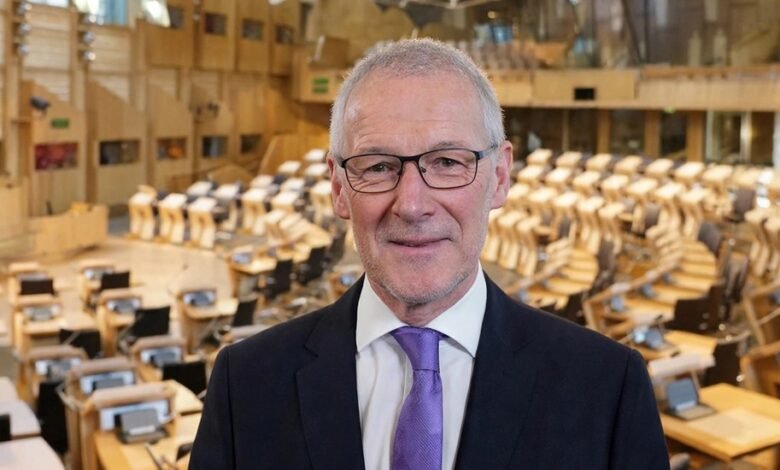
John Swinney is the First Minister of Scotland and leader of the Scottish National Party, reappointed in May 2026 after leading the SNP to a fifth consecutive Scottish Parliament election victory. He is one of the longest-serving figures in devolved Scottish politics: he has been a member of the Scottish Parliament since it opened in 1999, he led the SNP once before, between 2000 and 2004, and he has held almost every senior office in the Scottish Government, from finance to education to deputy first minister, before reaching the top job himself.
Swinney first became First Minister on 8 May 2024, succeeding Humza Yousaf, and he was nominated again on 19 May 2026 and sworn in the following day, forming his second government on 20 May 2026. The 2026 election gave his party 58 of the 129 Holyrood seats: the largest party, but seven short of a majority. Swinney therefore leads a minority government, as he did in his first term, and his second government is smaller and more tightly focused than his first.
Quick Bio
| Full Name | John Swinney |
| Born | 1964, Edinburgh, Scotland |
| Education | Forrester High School, Edinburgh; University of Edinburgh (MA, Politics) |
| Occupation | Politician |
| Current Role | First Minister of Scotland and Leader of the Scottish National Party (first appointed 8 May 2024; reappointed May 2026) |
| Earlier Roles | Deputy First Minister (2014–2023); Cabinet Secretary for Finance (2007–2016, 2022–2023); Cabinet Secretary for Education and Skills (2016–2021); Cabinet Secretary for Covid Recovery (2021–2023); SNP Leader (2000–2004); MP for North Tayside (1997–2001) |
| Party | Scottish National Party |
| Constituency | Perthshire North (MSP since 1999, representing the same area throughout) |
| Net Worth / Salary | No reliable, sourced figure is stated here |
From teenage activist to finance secretary
Swinney was born in Edinburgh in 1964, attended Forrester High School and studied politics at the University of Edinburgh, graduating with an MA. He joined the SNP in 1979, aged 15, and rose through the party’s organisation, becoming national secretary by 1986. Before entering Parliament he worked for the Scottish Coal Project, Development Options and Scottish Amicable.
He was elected MP for North Tayside in 1997, the year Labour returned to power at Westminster, and stood down from Westminster in 2001 to concentrate on Holyrood, where he had been elected MSP for Tayside North in the first Scottish Parliament election of 1999. He has represented the same area at Holyrood ever since, making him one of a small and dwindling group of MSPs who have sat in the Parliament since its beginning.
His first spell as SNP leader, from 2000 to 2004, came when the party was in opposition. He succeeded, and was then in turn succeeded by, Alex Salmond, and he fought three election campaigns as leader. It was not a triumphant period — the SNP did not break through under him — but it gave him a reputation for steadiness and organisation that would define the rest of his career.
The long apprenticeship in government
When the SNP came to power in 2007, Swinney became Cabinet Secretary for Finance and Sustainable Growth, a post he held until 2016. He was the minister who steered Scotland’s budgets through the financial crisis and its aftermath, surviving a vote in 2009 when his budget was initially voted down after the Greens refused to back it, before the spending plans were passed at a second attempt. Finance is the least glamorous and most consequential job in any government, and Swinney held it longer than almost anyone in devolved Scotland.
After the 2014 independence referendum, in which he had campaigned for Yes, he became Deputy First Minister under Nicola Sturgeon, serving from November 2014 to 2023. In that period he also held the education brief from 2016 to 2021 and the Covid recovery brief from 2021 to 2023, before returning to finance in 2022. He survived two votes of no confidence, and he became known as the minister Sturgeon turned to when a problem needed a safe pair of hands. By the time Sturgeon resigned in 2023, Swinney was the most experienced figure in the Scottish Government — and, briefly, out of frontline politics altogether, having stood down as deputy.
First Minister, twice
Swinney returned to the leadership in May 2024, after Humza Yousaf resigned following the collapse of the SNP’s power-sharing agreement with the Scottish Greens. He announced his candidacy on 2 May, faced potential challenges from Kate Forbes and Graeme McCormick, and was elected unopposed as SNP leader on 6 May, appointing Forbes as his Deputy First Minister. Parliament nominated him as First Minister on 7 May, and he was sworn in at the Court of Session on 8 May 2024, leading a minority government.
His first government set out four priorities: eradicating child poverty, growing the economy, improving public services and tackling the climate emergency, alongside the continuing push for a second independence referendum. The Westminster election of July 2024 was a severe setback — the SNP lost 39 of its 48 Commons seats, ending with nine MPs, a result Swinney himself called very, very difficult and damaging — but at Holyrood he held his government together and took it into the 2026 election.
At the election on 7 May 2026 the SNP won 58 seats, six fewer than in 2021, and fell short of the majority Swinney had said would be a mandate for a second independence referendum. Parliament nominated him again on 19 May 2026, and he was sworn in the next day. His second government, formed on 20 May 2026, is deliberately streamlined: the Cabinet was cut from twelve cabinet secretaries to nine, Jenny Gilruth became Deputy First Minister and Cabinet Secretary for Finance and Local Government, replacing Kate Forbes, who departed government after the election, and former Westminster SNP leader Stephen Flynn entered government for the first time as Cabinet Secretary for Economy, Tourism and Transport. Swinney said the government would focus on people’s priorities, and that the SNP would work proactively with other parties in a Parliament where it holds no majority.
What competitor biographies get wrong or leave out
- They present the 2024–2026 government as current. The first Swinney government dissolved on 20 May 2026. The current government is the second Swinney government, formed the same day, with a smaller Cabinet and a new deputy.
- They skip the first leadership. Swinney led the SNP from 2000 to 2004, in opposition, and that experience — including three election campaigns — explains his cautious, managerial style as First Minister.
- They underplay the finance years. Nine years as finance secretary, through crisis and recovery, is the foundation of his authority inside the SNP and in negotiations with Westminster.
- They invent personal detail. No net worth or salary figure is published here, and family detail beyond what reference sources confirm is omitted.
Frequently asked questions
Who is John Swinney?
First Minister of Scotland and leader of the Scottish National Party, first appointed in May 2024 and reappointed in May 2026.
How many seats did the SNP win in 2026?
58 of 129 seats at the Scottish Parliament election on 7 May 2026: the largest party, but short of an overall majority, so Swinney leads a minority government.
Who is John Swinney’s deputy?
Jenny Gilruth, appointed Deputy First Minister and Cabinet Secretary for Finance and Local Government in the second Swinney government of May 2026, succeeding Kate Forbes.
What is John Swinney’s net worth?
No reliable, sourced figure exists in the sources used here, so none is published.
More on Presslix
Sources and Further Reading
- John Swinney on Wikipedia — career timeline, governments and elections
- gov.scot — Biography: John Swinney (plain-text source)
- Wikipedia — Second Swinney government (plain-text source)
- The Gazette — John Swinney leads SNP to record fifth Holyrood victory (plain-text source)
Note on this article: election results and government formation dates are taken from the sources listed. No net worth or salary figure is claimed because no reliable figure exists in these sources.


2 Comments