
Introduction
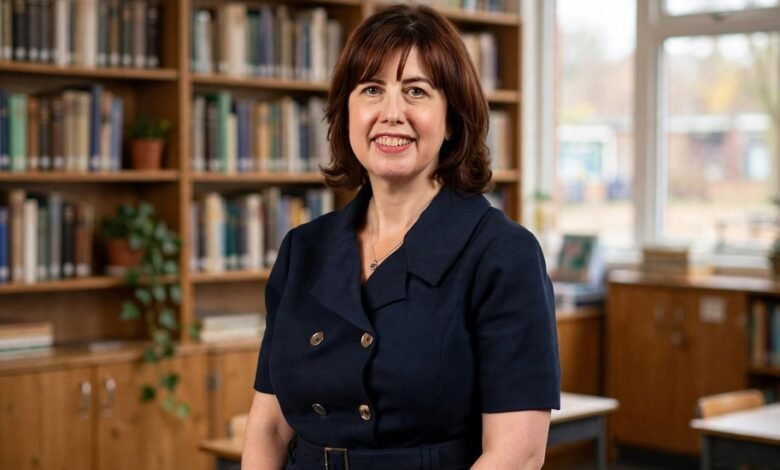
Lucy Powell is the Secretary of State for Education and the Deputy Leader of the Labour Party — two jobs that, taken together, make her one of the most important figures in the current government. She was appointed Education Secretary on 20 July 2026 by the new Prime Minister, Andy Burnham, less than a year after she had been sacked from the Cabinet. The comeback is the defining shape of her career: dismissed, elected by the party membership to its second-highest office, and then returned to government at the head of one of its largest departments.
Powell has represented Manchester Central since 2012. She is, by background and by politics, a Manchester politician first and a Westminster figure second — and her education brief, covering schools, colleges and universities across England, is one where that local grounding is tested daily.
Quick Bio
| Full Name | Lucy Maria Powell |
| Born | 10 October 1974, Manchester, England |
| Education | Studied in Manchester; worked in campaigning and public policy before Parliament |
| Occupation | Politician |
| Current Role | Secretary of State for Education (since 20 July 2026); Deputy Leader of the Labour Party (since 25 October 2025) |
| Earlier Roles | Leader of the House of Commons and Lord President of the Council (5 July 2024 – 5 September 2025); Shadow Secretary of State for Education (2015–2016); Shadow Secretary of State for Digital, Culture, Media and Sport; Shadow Housing Secretary |
| Party | Labour and Co-operative |
| Constituency | Manchester Central (since 2012) |
| Net Worth / Salary | No reliable, sourced figure is stated here |
Manchester roots and entry to Parliament
Powell was born and raised in Manchester, and she has made the city central to her political identity. Before entering Parliament she worked in campaigning and public affairs, including roles connected to education and social enterprise, and she was involved in Labour campaigning in the North West. That background gave her a network in Manchester civic life that most MPs take years to build — and it explains why, as Deputy Leader, she launched a “Lucy Listens” programme of engagement with members and communities around the country.
She was first elected to Parliament in a by-election in Manchester Central in November 2012, succeeding Tony Lloyd. She has held the seat at every general election since, and her majority and local profile have grown with it.
Shadow cabinet and the education brief, first time round
In opposition Powell held a string of shadow cabinet jobs that, read together, show the breadth of her brief. Jeremy Corbyn appointed her Shadow Secretary of State for Education in September 2015, succeeding Tristram Hunt. She held that post until June 2016. She later served as Shadow Secretary of State for Digital, Culture, Media and Sport, where she set out Labour’s vision for a thriving creative sector and a fairer digital economy, and as Shadow Housing Secretary, where she campaigned on the cladding scandal and on building more homes. She also served as Shadow Minister for Business and Consumers, and sat on the Commons Education Committee from 2017 to 2020.
The education thread runs through all of it. Even when her brief was housing or culture, Powell returned to the same themes: opportunity for children, skills for adults, and the institutions — schools, colleges, universities — that are supposed to deliver both.
Leader of the House, sacking and deputy leadership
When Labour won the 2024 general election, Keir Starmer appointed Powell Leader of the House of Commons and Lord President of the Council, a cabinet role that manages the government’s business in the Commons. She held it from 5 July 2024 until she was dismissed in the September 2025 reshuffle — a sacking that, at the time, looked like the end of her ministerial career.
It was not. Following the resignation of Angela Rayner, Powell stood for the Labour deputy leadership on 9 September 2025. She defeated Bridget Phillipson on 25 October 2025, winning with 54.3 per cent of the vote — 87,407 votes, almost 14,000 more than Phillipson. She held the deputy leadership through the end of Starmer’s leadership and into Burnham’s, and Burnham had publicly supported her campaign. The result was a direct mandate from the party membership, of a kind that no cabinet appointment can replicate, and it changed her standing overnight: from sacked minister to the party’s elected second-in-command.
Education Secretary under Burnham
On 20 July 2026 Burnham appointed Powell Secretary of State for Education, succeeding Phillipson, who remained in the Cabinet as Minister for Women and Equalities. Powell became the tenth person to hold the education brief in ten years — a statistic that itself tells a story about churn at the top of English education policy.
Her inheritance is large and immediate. She is responsible for primary, secondary and higher education, for colleges and 16-to-19 education, for technical qualifications, and for major reforms to special educational needs and disabilities (SEND) provision. Her immediate post-16 challenges include overseeing the introduction of the first V Levels from September 2026, while responsibility for adult education, apprenticeships and Skills England moved to the Department for Work and Pensions in the previous September. Teaching assistants’ pay and funding, raised with her within days of her appointment, are a measure of the everyday pressures that sit alongside the big structural reforms.
Powell has said she was “absolutely thrilled” to be appointed. The test of her tenure will be whether a politician who has now held the education brief twice — once in opposition, once in government — can give the system the stability that ten secretaries in ten years have not.
What competitor biographies get wrong or leave out
1. They still call her Leader of the House. That was a past role, ending in September 2025. Her current roles are Education Secretary and Deputy Leader of the Labour Party.
2. They miss the deputy leadership election. Many short biographies jump from the 2025 sacking to the 2026 cabinet appointment, skipping the October 2025 deputy leadership victory that explains the comeback. Without it, the return to government looks like a favour; with it, it looks like a mandate.
3. They flatten her shadow career. Powell’s spells as Shadow Education Secretary, Shadow DCMS Secretary and Shadow Housing Secretary are often reduced to a list. Together they show a politician who has worked across the domestic policy areas that now meet in her department.
4. They invent personal detail. No net worth or salary figure is published here, and family detail beyond what reference sources confirm is omitted.
Frequently asked questions
Who is Lucy Powell?
Secretary of State for Education since 20 July 2026 and Deputy Leader of the Labour Party since 25 October 2025, and MP for Manchester Central since 2012.
When did Lucy Powell become Deputy Leader?
25 October 2025, when she defeated Bridget Phillipson with 54.3 per cent of the vote.
Was Lucy Powell Leader of the House?
Yes, from July 2024 to September 2025, when she was dismissed in a reshuffle. It is a past role, not her current one.
What does Lucy Powell oversee as Education Secretary?
Schools, colleges, 16-to-19 education, technical qualifications, SEND reform and higher education in England.
What is Lucy Powell’s net worth?
No reliable, sourced figure exists in the sources used here, so none is published.
More on Presslix
- Yvette Cooper: Health Secretary, Former Home and Foreign Secretary, Career Explained
- Presslix Biography
Sources and Further Reading
- Lucy Powell on Wikipedia — career timeline, deputy leadership election and ministerial offices
- Labour Party — Lucy Powell profile (plain-text source)
- FE Week — Lucy Powell appointed education secretary, July 2026 (plain-text source)
- Schools Week — Burnham reshuffle: Lucy Powell made education secretary (plain-text source)
- Times Higher Education — Lucy Powell named education secretary, July 2026 (plain-text source)
Note on this article: ministerial dates and election figures are taken from the sources listed. No net worth or salary figure is claimed because no reliable figure exists in these sources.





One Comment